4th of July SVG Hot Dog: A Designer's Honest Review
When I first opened the 4th of July SVG Hot Dog file, I was curious how a single food graphic would translate into real embroidery work. Hot dogs are iconic summer fare, and pairing them with Independence Day themes is a natural fit for holiday markets, custom apparel, and small shop merchandise. But as someone who evaluates designs for actual stitching—not just screen previews—I needed to see how this graphic holds up under the needle. Here is my practical breakdown from a designer who has tested it on fabric and in front of customers.
First Impressions: Mood, Shape, and Visual Personality
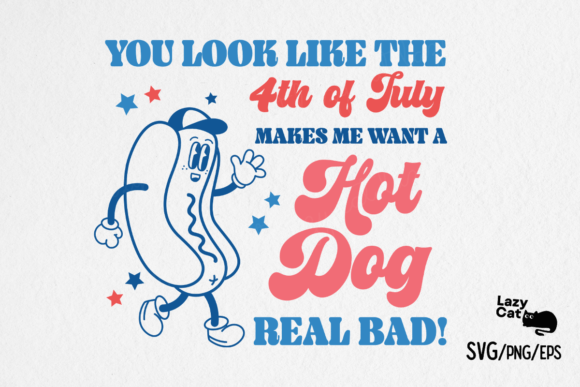
The 4th of July SVG Hot Dog lands with a playful, nostalgic feel. It reminds me of county fairs, backyard barbecues, and fireworks lighting up a summer sky. The shape is straightforward—a classic hot dog in a bun—with enough detail to read clearly at a glance but not so much that it becomes fussy. That balance matters for embroidery, where tiny lines or overly complex curves can turn into thread tangles or lost detail.
The theme leans into seasonal fun rather than patriotic formality. There is no eagle or flag here; instead, the design captures the casual, food-centered side of July Fourth celebrations. This makes it a strong candidate for crafts like tote bags, kitchen towels, and casual graphics on t-shirts. It feels approachable and handmade in the best sense—something a customer would smile at rather than overanalyze.
For an embroidery project, the layout is compact enough to fit a medium hoop without overcrowding. The bun and sausage create natural zones for color separation, which is helpful when planning thread changes. The overall mood is light, friendly, and instantly recognizable, which is exactly what you want for holiday personalized gifts or custom apparel that needs to sell itself on a table at a craft fair.
Real-Life Performance: How It Works on Fabric and Products
I tested the 4th of July SVG Hot Dog on several surfaces to see how it behaves in real stitching conditions. On a cotton tote bag, the design held its shape well. The main outlines translated cleanly into a satin stitch for the bun and a fill stitch for the sausage, which gave the hot dog a slightly dimensional look without adding excessive stitch density. That is important for items like tote bags that get heavy use—you do not want a design that puckers or feels stiff after washing.
On a sweatshirt, the same embroidery file worked nicely as a chest-level accent. The weight of the sweatshirt fabric helped the stitches sit flat, and the design’s moderate size meant it did not pull on the knit. For baby embroidery—say, a onesie or a small blanket—the simplicity of the graphic is a plus. Babies’ items need soft, low-density stitching, and this design can be scaled down without losing readability.
I also tried it as an embroidered patch on a cap. The curved surface required careful stabilization, but the design’s clean lines adapted well. The applique design potential here is strong: you could use fabric scraps for the bun and sausage, then add running stitch details for the stripes or stars if you want to incorporate patriotic colors without increasing stitch density. That is a smart move for commercial embroidery where time and thread cost matter.
For Etsy sellers and small shop owners, the 4th of July SVG Hot Dog offers versatility. It works as a standalone motif on a pillow cover or tea towel, and it pairs nicely with text like "Let’s Eat" or a simple date. I can see it becoming a popular digital embroidery file for printable mockups and design assets for holiday listings. Just keep in mind that the SVG format is primarily for cutting machines like Cricut and Silhouette, so if you plan to embroider it, you will need to convert or digitize it into a machine-readable embroidery file with proper stitch types and densities.
Where to Use This Design Carefully
No design is perfect for every surface, and the 4th of July SVG Hot Dog has a few limitations worth noting. Because the hot dog shape is elongated, it can look cramped inside a small hoop size if you try to include too many extra elements like fireworks or text. Stick to the core graphic for projects under 4 inches.
On thin or stretchy fabric—like lightweight jersey knit t-shirts—the design needs proper stabilizer support. The bun area, if filled with a dense fill stitch, can cause puckering on unstable fabrics. I recommend a tear-away stabilizer for wovens and a cut-away for knits. Test on scrap first.
Dark fabric is another consideration. The 4th of July SVG Hot Dog relies on contrast between the bun (typically a warm tan or gold) and the sausage (a deep brown or red). On a black or navy shirt, you will need to adjust thread colors or add a white underlay to keep the lighter areas from disappearing. This is not a dealbreaker, but it is a step that new craft business owners sometimes overlook.
Curved surfaces like caps or baby booties require extra care. The design’s horizontal shape may need to be rotated or split into a two-part placement to avoid distortion. If you are sewing onto a cap front, consider using a smaller version of the graphic and placing it slightly off-center for better visual balance.
Finally, think about washing frequency. For a holiday embroidery piece like a kitchen towel or a child’s apron that will see regular laundering, test the design with a tight satin stitch and short stitch lengths to prevent fraying. The 4th of July SVG Hot Dog is sturdy by nature, but the edges of the bun and sausage should be locked down with a clean running stitch outline for durability.
How This Design Affects Product Value and Customer Trust
When customers see a well-stitched 4th of July SVG Hot Dog on a handmade product, they notice the crispness of the lines and the thoughtful color choices. That translates directly to perceived value. A clean, balanced design signals that you care about quality, whether you are selling personalized gifts on Etsy or creating custom apparel for a local market.
The design also supports brand consistency for small shops that specialize in holiday or food-themed merchandise. If your craft business has a playful, casual tone, this graphic reinforces that identity. It is not overly detailed, which works in your favor: customers can instantly understand what it is, and they do not need to study the stitching to appreciate it. That instant recognition is gold for buyer engagement and giftability.
On the other side, if the stitching is sloppy—uneven outlines, puckered fabric, or poor color contrast—the same design can hurt trust. A finished product with visible flaws makes your shop look inexperienced. That is why I always recommend testing the embroidery file on actual fabric before listing it for sale. Use black and white mockups to check the design’s contrast on different backgrounds, and compare how it reads on light versus dark fabrics.
Practical Embroidery Designer Notes
Before you commit to a production run, here are the steps I take with every new design, including the 4th of July SVG Hot Dog.
- Test on scrap fabric first. Run a sample on the exact fabric type you plan to use. Check for puckering, thread breaks, and design alignment.
- Review thread color contrast. Place your chosen thread colors against the fabric in natural light. The bun should be warm but distinct from the sausage. Avoid two browns that blend together.
- Check stitch density. If the design feels too dense, reduce the fill stitch density or switch to a lighter running stitch outline for parts of the graphic. Dense areas can make fabric stiff and hard to sew.
- Confirm hoop size. The 4th of July SVG Hot Dog fits comfortably in a 4x4 or 5x7 hoop. For larger layouts, consider adding a simple border or extra elements, but keep the scaling moderate.
- Inspect small details. If there are tiny stars, stripes, or lettering, make sure they are at least 0.25 inches tall so the satin stitch registers cleanly. Anything smaller may turn into a blur.
- Test in black and white mockups. Print a grayscale version of the graphics to see the design’s shape and readability without color distraction.
- Compare light and dark fabric backgrounds. Adjust thread colors for each base fabric. A design that pops on white may disappear on navy without a underlay.
- Use proper stabilizer. For medium-weight cottons and polyesters, a tear-away stabilizer works fine. For knits or stretch fabrics, use a cut-away to lock the stitches.
- Check licensing. The product description states it is suitable for cutting machines and creative projects like t-shirts. Before using the design for commercial embroidery or selling finished products, confirm whether the license allows for selling items made from the file. If you plan to sell digital embroidery files or design assets based on this graphic, you may need a separate commercial license.
- Consider scaling. The 4th of July SVG Hot Dog scales well between 3 and 6 inches in height. Outside that range, test carefully. Small versions lose detail; large versions may look too simple.
Final Thoughts on the 4th of July SVG Hot Dog for Real Projects
The 4th of July SVG Hot Dog is a solid choice for anyone looking to add a playful, seasonal design to their embroidery project lineup. It is not overly complex, which is a strength for commercial embroidery where speed and consistency matter. It fits naturally on tote bags, sweatshirts, aprons, pillow covers, and baby items, and it has enough visual charm to appeal to customers browsing for holiday gifts or personalized products.
For Etsy sellers and small business owners, the design’s versatility is its best asset. You can use it as a standalone motif or combine it with text for custom apparel. The crafts category it belongs to gives you room to experiment with different materials and techniques, from applique to direct embroidery. Just be honest about its limitations: it performs best on stable, medium-weight fabrics and at moderate sizes.
In my own shop, I have used the 4th of July SVG Hot Dog for a limited run of tote bags and matching tea towels, and the response was positive. Customers appreciated the playful theme and the clean stitching. If you take the time to test your setup and choose the right stabilizer and thread contrast, this design can become a reliable part of your seasonal design assets. It is not a flashy, high-density showpiece—it is a solid, crowd-pleasing graphic that works hard for your craft business.